Choosing Your First Frequency: A Practical Guide to Alpha, Theta, Delta & Beta
Not sure which binaural frequency to pick? This practical guide explains Alpha, Theta, Delta and Beta ranges, what each is best for, and how to choose your first sessions for sleep, focus, meditation or calm.
By Oleksii Grebeshkov
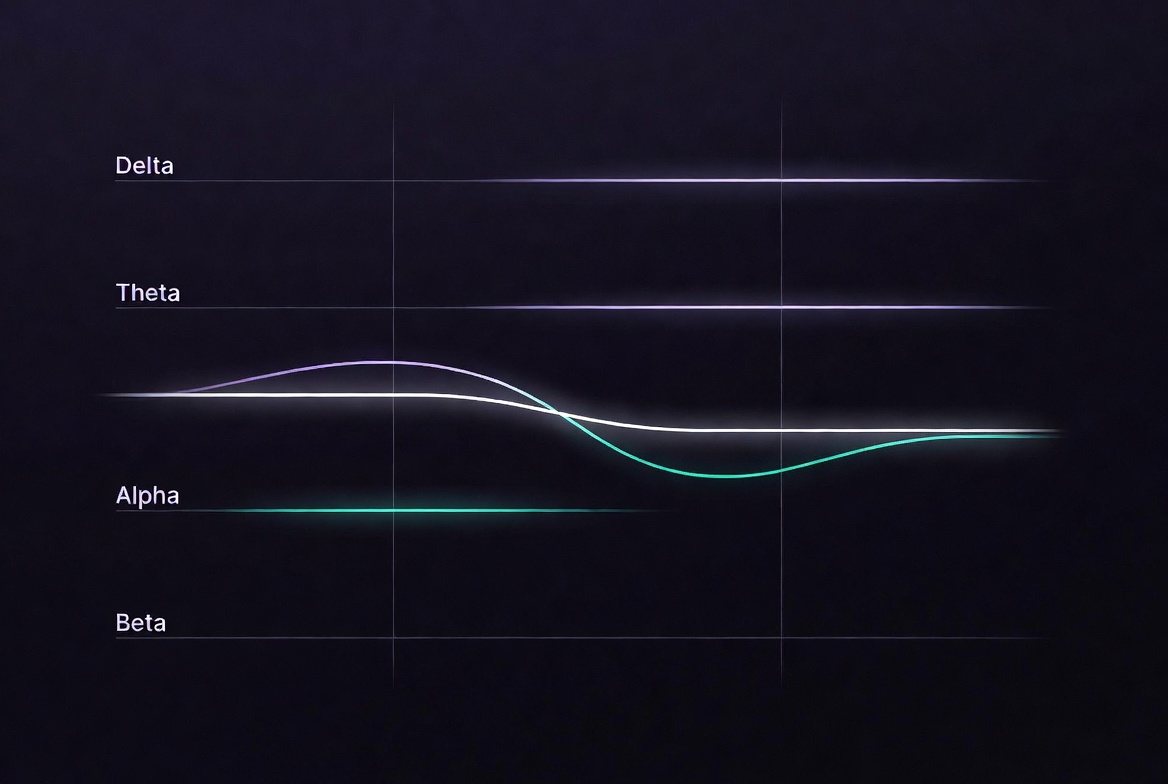
Picking a binaural beat frequency can feel like guessing. Different tracks promise focus, deep sleep, meditation, or calm, yet the labels are not always clear. The good news is that the main frequency bands have reasonably consistent associations, and you can match them to your goal and time of day with a simple framework.
This guide covers the four most useful bands for everyday listening—Alpha, Theta, Delta, and Beta—explains what each is typically linked to, notes the practical limits of the evidence, and gives concrete starting recommendations.
Quick Reference Table
| Band | Approximate range | Typical associated states | Best used for |
|--------|-------------------|-----------------------------------------------|----------------------------------------|
| Delta | 0.5–4 Hz | Deep sleep, physical recovery | Falling into deep sleep, overnight recovery |
| Theta | 4–8 Hz | Drowsiness, meditation, creativity, REM-adjacent | Meditation, wind-down, vivid dreaming, creative work |
| Alpha | 8–13 Hz | Relaxed alertness, calm focus | Stress reduction, light focus, transition states |
| Beta | 13–30 Hz | Active thinking, concentration | Analytical work, reading, sustained attention |
(Note: exact boundaries vary slightly across sources; the ranges above are the most commonly used in research and practice.)
Delta (0.5–4 Hz)
Delta is the slowest band and dominates deep, non-REM sleep (especially stage N3). It is associated with physical restoration and reduced conscious awareness.
Practical use:
Choose delta when your primary goal is deeper sleep or helping the body recover. Many sleep flows begin with higher frequencies and descend into delta, or stay in the lower range for longer sessions.
Caveats:
Pure delta while fully awake can feel heavy or make some people drowsy at the wrong time. It is rarely the best first choice for daytime use.
Theta (4–8 Hz)
Theta appears during light sleep, the transition into sleep, deep meditation, and creative or introspective states. It is also prominent in REM sleep.
Practical use:
Meditation or “dropping in”
Evening wind-down
Supporting vivid or lucid-dream-oriented sessions
Creative ideation when you want a looser, more associative mode of thought
Many people find mid-theta (around 5–7 Hz) especially useful for meditation and pre-sleep routines.
Caveats:
Theta can increase drowsiness. Avoid it right before tasks that demand sharp external attention.
Alpha (8–13 Hz)
Alpha is the classic “relaxed but awake” rhythm. It often increases when the eyes are closed and the mind is calm yet not sleepy. It is linked to reduced stress and a state of easy, open attention.
Practical use:
Daytime stress reduction
Light focus or “flow-friendly” work
Transitioning from high alertness into a calmer mode
A safe, versatile starting point for beginner.
Alpha is frequently the most forgiving first frequency. It rarely makes people overly sleepy or overly wired.
Beta (13–30 Hz)
Beta supports active, outward-directed thinking. Lower beta (roughly 13–20 Hz) is often associated with focused concentration; higher beta can accompany anxiety or mental overactivity.
Practical use:
Analytical work, reading, studying, or coding
Tasks that require sustained attention and logical processing
A short “activation” segment at the start of a work block
Many practical focus sessions use a low-to-mid beta range (often 15–20 Hz) rather than the highest beta frequencies.
Caveats:
Higher beta can feel stimulating or edgy for some listeners. If a beta track increases restlessness, drop into alpha or stop.
How to Choose for Your Goal
I want better sleep
Start with a descending flow (alpha → theta → delta) or a theta-to-delta session in the hour before bed. Pure delta works for some; others prefer a longer theta tail.
I want to meditate or quiet the mind
Theta is the most common recommendation. Alpha can also work well, especially if pure theta feels too heavy at first.
I want calm focus or stress relief during the day
Alpha is usually the safest and most effective starting point.
I need sharp concentration for work or study
Low-to-mid beta (around 15–20 Hz). Keep sessions moderate in length and stop if you notice tension rising.
I want creativity or a more open mental state
Theta (or alpha-to-theta) often supports this better than high beta.
Practical Tips for First Sessions
1. Start with alpha if you are unsure. It is the most versatile and least likely to produce an unwanted state.
2. Match the frequency to the time of day. Delta and deep theta belong mainly to evening or sleep contexts. Beta and alpha suit daytime.
3. Use stereo headphones and a comfortable volume.
4. Keep early sessions short (10–20 minutes) while you learn how each band feels in your body and mind.
5. Notice the actual effect, not the label. Individual responses vary. If a “focus” track makes you sleepy or a “sleep” track leaves you alert, adjust accordingly.
6. Carrier frequency and tone type matter less than the beat frequency for beginners, but most well-designed tracks use carriers in a range the auditory system handles easily (often 100–400 Hz).
A Note on the Evidence
The associations above come from decades of EEG observation and are widely accepted as approximate maps of brain states. When these frequencies are delivered as binaural beats, the evidence for reliably shifting brain activity or producing strong behavioral changes is more modest and mixed. Some meta-analyses find small-to-moderate benefits for anxiety, pain, and certain cognitive outcomes; pure entrainment results are inconsistent. Treat the frequency bands as useful starting hypotheses rather than guaranteed switches.
Getting Started
Pick one goal for the next few days. Choose the matching band from the table. Run short sessions at a consistent time. Pay attention to how you feel during and after. Adjust based on real experience rather than theory.
Once you know how alpha, theta, delta, and beta actually feel for you, choosing the next track becomes straightforward. The best frequency is the one that reliably supports the state you want, at the time you need it.